
Baking With Buckwheat
Sourdough, scones, apple cake, and everything in between.

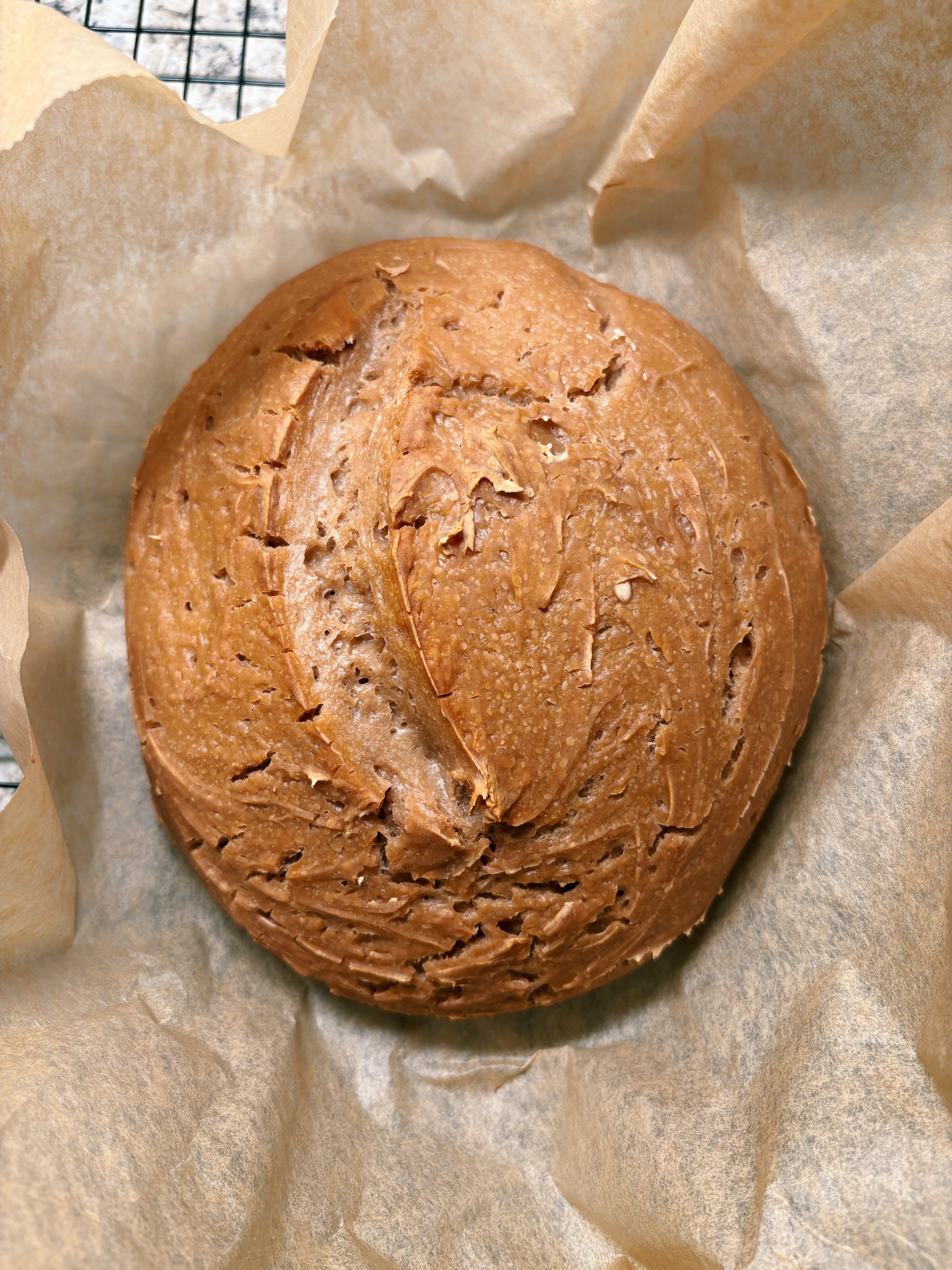
I’m typing this while watching the clock - approximately 55 minutes until I can slice into a mostly cooled fresh loaf of buckwheat sourdough.
But it’s been a journey to get here.
Mastering the 100% buckwheat sourdough has been a huge recent win of mine.
What started as a hyperfixation with the Pacha sourdough english muffins evolved into a faint whisper in the back of my mind: you can totally make this yourself.
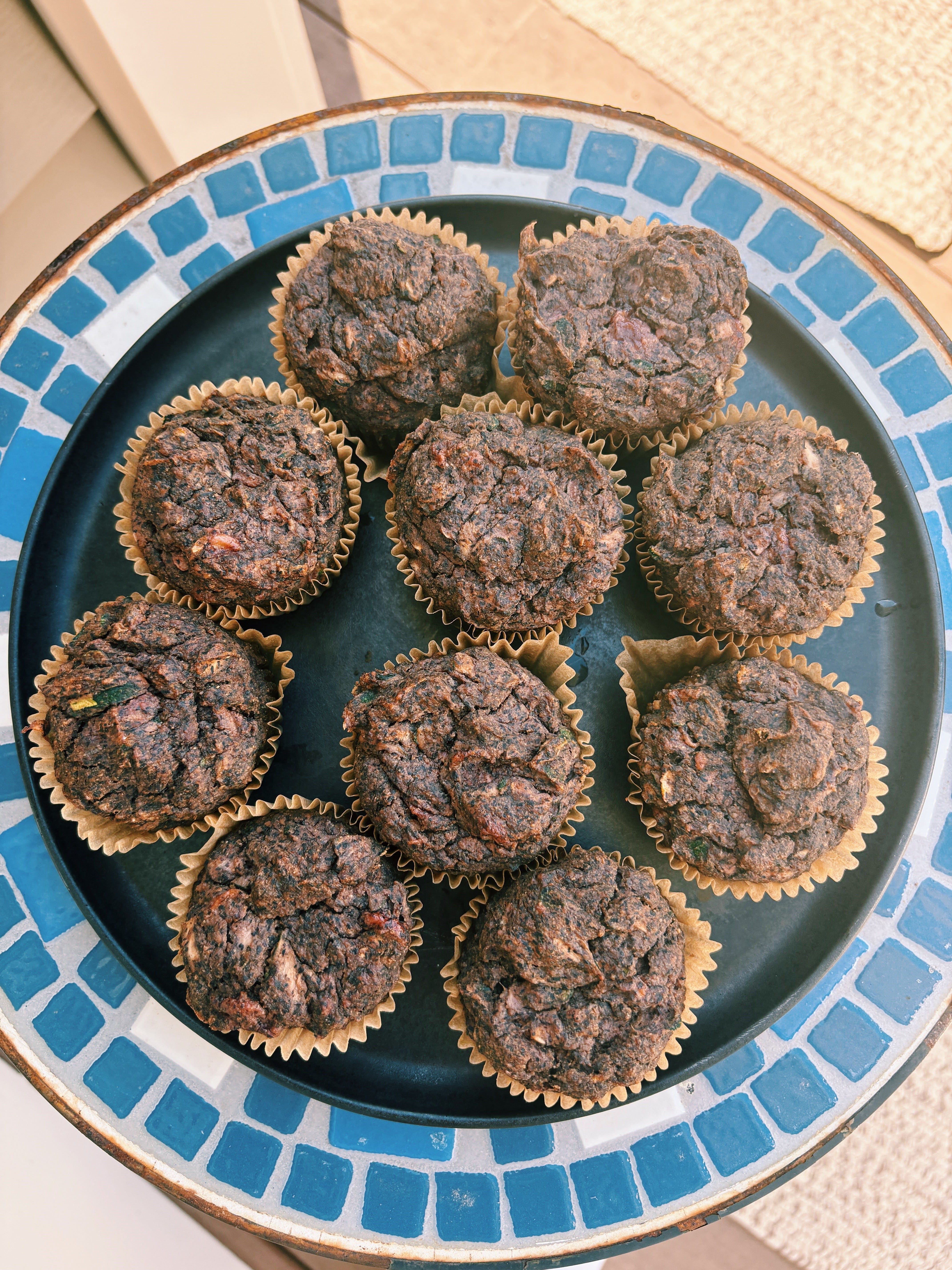
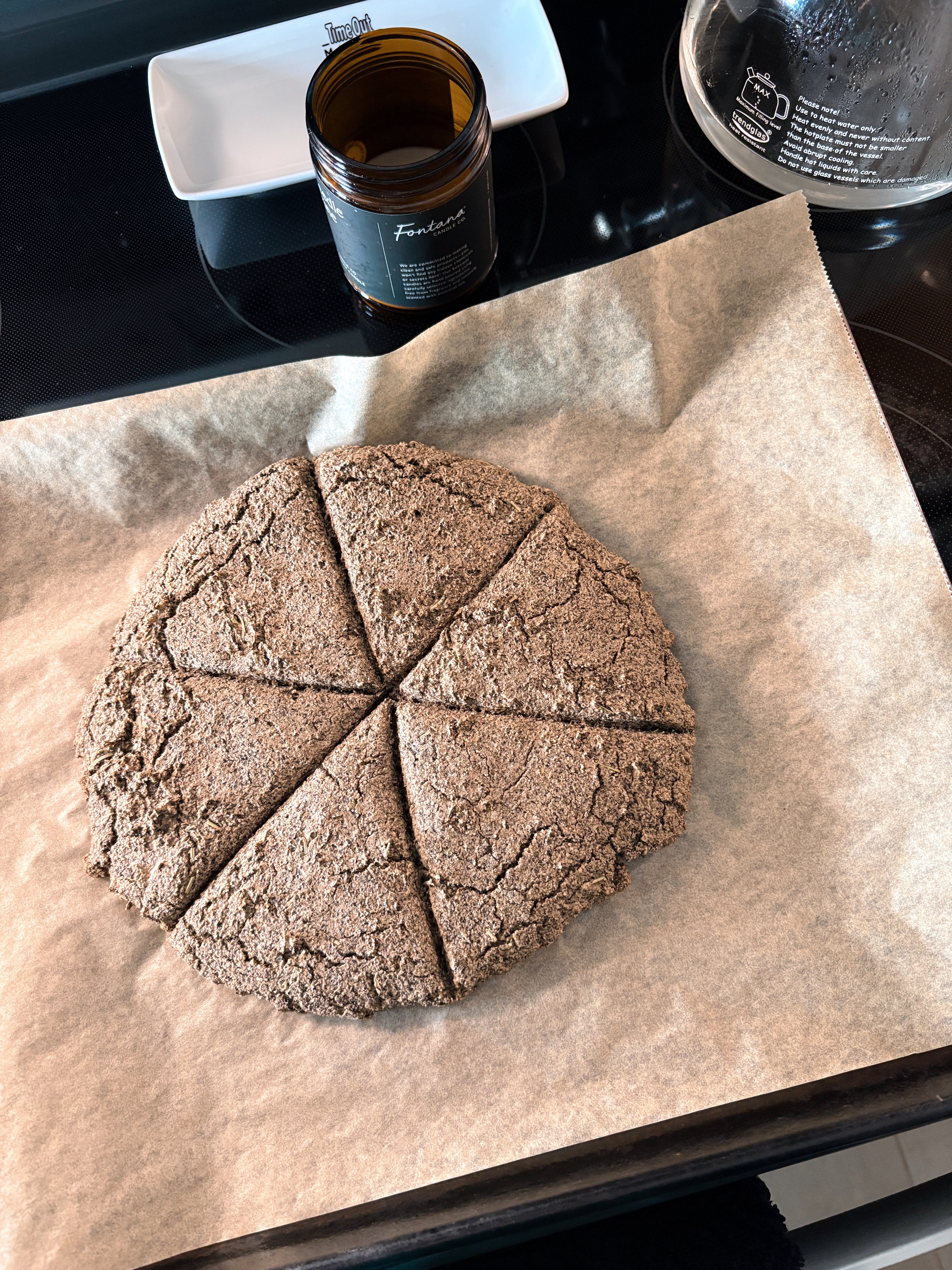
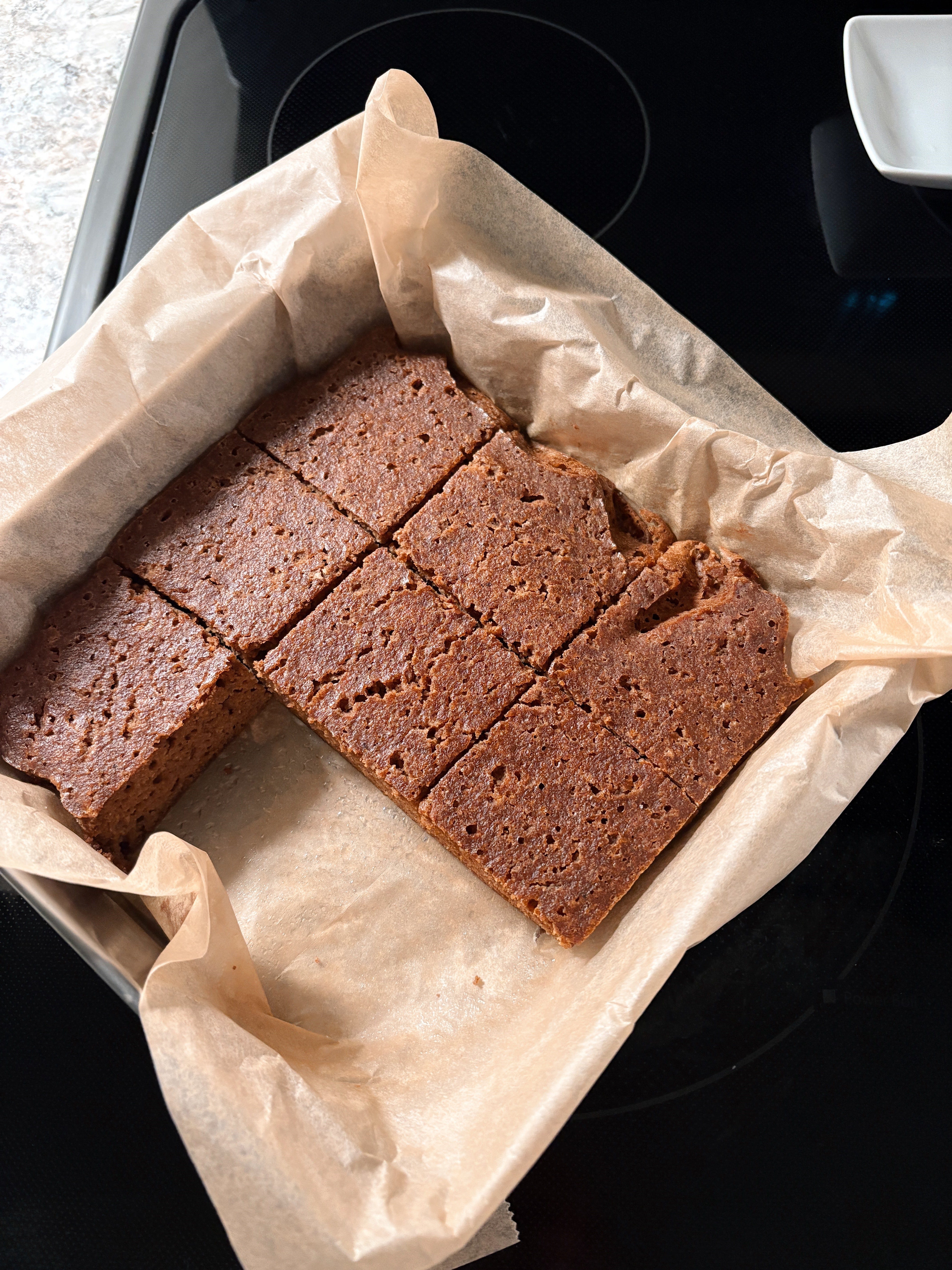
And from a little flicker of wonder emerged my new hobby: baking with buckwheat.
But before we preheat the oven, let’s debrief.
What is buckwheat exactly?
Despite it’s name, buckwheat is actually a seed, harvested from a plant similar to rhubarb. It’s not a grain, and contains no wheat, making it entirely gluten-free.
What does buckwheat taste like?
Comparable to a whole wheat flour, it’s nutty, earthy, and rather flavorful, particularly if you’re using a dark buckwheat flour.
Why should I use it?
Not only is buckwheat an incredible tool to leverage in your gluten-free baking, but it’s incredibly nutritious:
A complete source of plant protein, containing all 6 essential amino acids
Rich in B-vitamins, magnesium, manganese, zinc, iron, copper, and folate
Contain antioxidants (specifically rutin and quercetin) which fight free-radicals in the body
High in soluble fiber, combating blood sugar spikes and aiding digestion
Now that we’re through the basics, a few caveats:
Gluten-free baking is not for the faint of heart, and working with buckwheat flour is no exception. I will do the best to share my experience with you and give you my tips, but you will likely have to experiment a bit to find what ratios, temperatures, and bake times work best for you.
Buckwheat can be dry. I personally like that crunchy, earthy, nutty texture, but if that’s not for you, then you will probably prefer recipes that call for almond flour or coconut flour too, as they will result in a softer and lighter finished product.
Buckwheat is flavorful. I would advise selecting a buckwheat flour based on how much, or how little, you want to taste the buckwheat versus the other flavors in your bakes.
Mise en place - let’s pick a flour.
There are two main types I use depending on what I’m baking and what flavor profile I’m seeking:
Bob’s Red Mill Organic Buckwheat Flour
Taste: very nutty, rich, dense, and flavorful
Tips: on the drier side, and when using this flour you may need to add a bit more liquid than your recipe calls for
Relative Food’s Organic Buckwheat Flour
Taste: lighter and more neutral, ideal for desserts where you want the other flavors to shine
Tips: slightly sticker, so be aware that it may be more difficult to manage if you’re using your hands on the dough
I love both of these flours. But if you’re just starting out and want to dabble with buckwheat without punching yourself in the face with flavor, I would recommend the lighter option from Relative Foods.
Okay, the hot topic today.
Is it really possible to make a 100% buckwheat sourdough?
The answer is yes. But there is some patience involved.
If you know anything about sourdough, you’re already ahead here. But if you don’t, I promise it’s foolproof.
Keep reading with a 7-day free trial
Subscribe to We Bloomed in June to keep reading this post and get 7 days of free access to the full post archives.